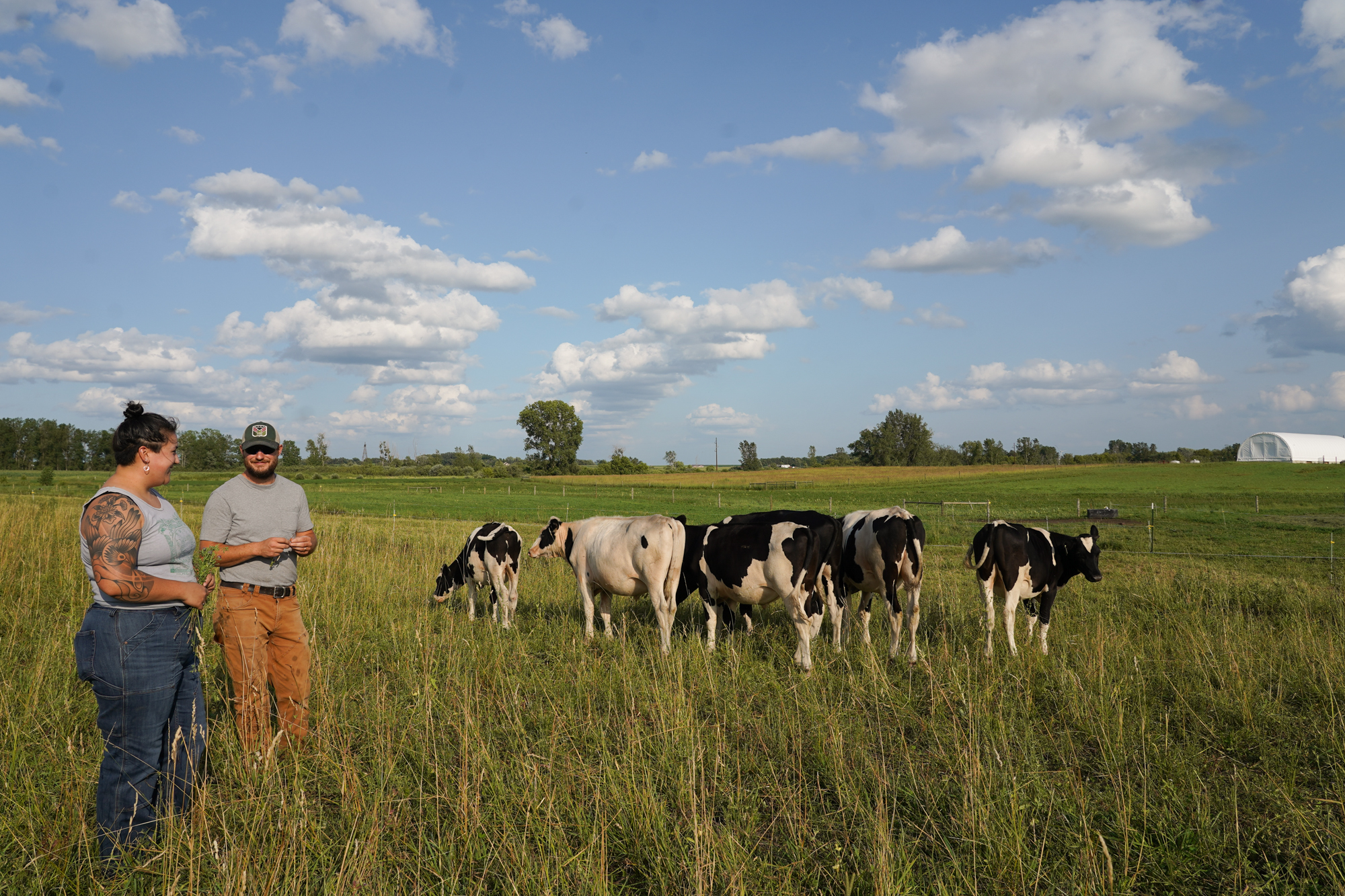
April Farmer Mixer Roundup
Though the Farm Bill has been front-and-center as of late, the farmers of NYFC are not forgetting to have a good time! April was full of young farmer mixers, from Fort Collins to Albuquerque, Texas to Rhode Island.
In Fort Collins, farmers from Colorado’s Front Range celebrated their second mixer potluck-style, packing the Empire Grange and dancing to the banjo-picking tunes of Blue Grama Bluegrass. Seasonal brews from New Belgium and Odell Brewing were enjoyed the night-long.
The Texas Young Farmers’ Coalition hosted a Texas BBQ fundraiser at Green Gate Farms complete with a pig roast, cornbread, and gallons of ales and cider—these farmers sure know how to eat! Not to mention raise money for a great cause: all proceeds went Cardo’s Farm Project, a community farm and education center serving the community of Denton, TX.
Young Farmer Night hosted the New Urban Farmers/Urban Food Lab event in Pawtucket, Rhode Island. YFN began as an informal gathering of farmers to share food and company. It continues the tradition of potlucks, farm tours and fun activities (music, cards, bonfire anyone?) and now includes educational workshops and farmer advocacy events as YFN continues to grow.
Later in the month, over 200 farmers and farm-supporters joined NYFC and the Rio Grande Farmers’ Coalition to kick-off the start of the new Albuquerque-based chapter. Local food was prepared by volunteer farmers and beer brought in from Marble Brewery. We were honored to have NM Congresswoman Lujan-Grisham share a few words in support of beginning farmers. The day couldn’t have been more beautiful beneath the old cottonwoods of Old Town Farm.
This is just a small taste of the many awesome farmer gatherings taking place this spring. Is there something going on in your neck of the woods? Let us know what you’re up to!
Republicans and Democrats Introduce New Bill To Aid Beginning Farmers
FOR IMMEDIATE RELEASE
April 25, 2013
Contact: lindsey(at)youngfarmers(dot)orgRepublicans and Democrats Introduce New Bill To Aid Beginning Farmers
“Beginning Farmer and Rancher Opportunity Act of 2013” addresses major barriers to starting a farming career
TIVOLI, NY – Today, Senator Tom Harkin of Iowa and Representative Tim Walz of Minnesota announced the introduction of the Beginning Farmer and Rancher Opportunity Act of 2013 in both the Senate and the House of Representatives. The two identical bills expand opportunities and remove barriers for beginning farmers and those who wish to pursue a career in agriculture.
In addition to the bill’s lead sponsors, the following members have signed on as original co-sponsors: Reps. Jeff Fortenberry (R-NE-1), Chris Gibson (R-NY-19), and House Agriculture Committee Ranking Member Collin Peterson (D-MN-7) in the House, and Sens. Patrick Leahy (D-VT), Sherrod Brown (D-OH), Bob Casey (D-PA), Jon Tester (D-MT), Tom Udall (D-NM), Jeff Merkley (D-OR), and Al Franken (D-MN) in the Senate.
“Short of jumping on a tractor, the Beginning Farmer and Rancher Opportunity Act of 2013 is the best way that members of Congress can help the nation’s young growers,” says Lindsey Lusher Shute, Executive Director at the National Young Farmers Coalition. “The bill tackles the significant barriers to starting a farm in the US, including access to credit, land and training opportunities. NYFC urges Congress to include all of its provisions in the Farm Bill, and to pass a Farm Bill this year.”
The Beginning Farmer and Rancher Opportunity Act is a comprehensive legislative package that invests in critical federal conservation, credit, research, and rural development programs that support opportunities for new farmers and ranchers. The bill reduces barriers, such as credit and land access issues, that new agriculture entrepreneurs face, and invests in successful new-farmer training programs and grants to help farmers capture more of the retail food dollar through value-added enterprises.
“With the average age of the U.S. farmer at 57, ensuring that the next generation of American farmers is able to provide the world with a safe, abundant supply of food should be a top priority,” said Congressman Walz, Ranking Member of the U.S. House Agriculture Subcommittee on Conservation, Energy, and Forestry. “To accomplish this goal, we must provide our youth with the training and tools they need to seize opportunity and take up farms of their own. By easing access to lines of credit and land, and creating training programs for new producers, the Beginning Farmer and Rancher Opportunity Act works to do just that.”
“As the House considers a five year Farm Bill this year, it is important we include provisions to encourage a new generation of New Yorkers to take up farming. This is both critical to maintaining the rural nature of our communities and ultimately is a national security issue as we need to have a robust domestic food supply. This bipartisan legislation will expand opportunities for those looking to take up farming and facilitate their entrance into the field. I applaud the National Young Farmers Coalition for bringing this issue to my attention originally, and look forward to continuing to work with my constituents to ensure we can get these initiatives included in the Farm Bill,” said Congressman Chris Gibson.
Some of the specific proposals in the bill include:
Expanded Credit Options
The bill would create a new microloan program that would make loans of up to $35,000 to young, beginning, and veteran farmers seeking capital to help cover start-up costs, such as purchasing seeds or building a greenhouse. The bill would also give new farmers increased flexibility in meeting loan eligibility requirements for FSA loans to purchase farmland. Finally, the bill would provide funding to jump start an Individual Development Account pilot program aimed at helping beginning farmers with limited financial resources to establish savings accounts that could later be used to cover capital expenditures for a farm or ranch operation, including purchases of land, buildings, equipment, or livestock.
Access to Farmland
The legislation would help new and aspiring farmers access land to start or expand their farming operations by continuing and improving the successful Down Payment Loan Program, which provides much needed capital to new farmers seeking to purchase property. The bill would also modify the Farm and Ranchland Protection Program to give priority to preserving farmland that is accessible and affordable to new farmers.
New Farmer Training Programs
The bill would renew funding for the successful Beginning Farmer and Rancher Development Program, which provides grants to organizations and institutions to establish new farmer training programs. This program is the only federal initiative that is exclusively dedicated to training the next generation of farmers and ranchers.
Value-Added Enterprises
This legislation invests in critical economic development programs, including the popular Value-Added Producer Grants program, which provides grants to farmers to scale up their businesses and add value to their products in order to meet surging consumer demand for high quality, farm-based, value-added food products such as farmstead cheese, salsa, and grass-fed beef.
Agricultural Opportunities for Veterans
The bill would also expand resources and create economic opportunities for military veterans interested in pursuing a career in agriculture by establishing a funding priority for new farmer training and agricultural rehabilitation programs specifically geared at returning veterans, and creating a new Veterans Agricultural Liaison within the USDA to help connect returning veterans with beginning farmer resources and assist them with program eligibility requirements for participation in farm bill programs.
National Young Farmers’ Coalition (NYFC) is national network of young and sustainable farmers organizing for our collective success: we’re defining the issues that beginning farmers face, fighting for the policy change that we need, and bringing farmers together in person and online to learn, share and build a stronger community. NYFC is a farmer-led partnership between young farmers and innovative beginning farmer service providers and is fiscally sponsored by the Open Space Institute, a 501(c)3 non-profit organization.
###
Agriculture needs resilient resource management
Farmers across the country have plenty of challenges before them, such as access to land and capital and low-interest loans. Farmers in the Colorado River Basin–the western states of Colorado, Wyoming, New Mexico, Utah, Arizona, Nevada, and California–face an additional challenge: water.
In this second of two blog posts on America’s Most Endangered River–the Colorado River–beginning farmer Alison Gannett speaks of the need to understand that healthy rivers are essential to healthy farms.
~

Alison Gannett, holding carrots from her Holy Terror Farm. Photo courtesy of www.alisongannett.com.
When I heard that the Colorado River would be named #1 on the 2013 list of America’s Most Endangered Rivers® by American Rivers, I was saddened, but not surprised.
As farmers in Colorado’s North Fork Valley, my husband Jason and I know full well that the waters of the Colorado River are the lifeblood of agriculture for us as well as many Western farmers in the seven basin states. Outdated water management requires us to “use it or lose it”, which does not make sense in this century.
I did not hesitate to be a part of the Las Vegas press conference announcing the news on April 17.
Growers in our area have consistently found new crops to grow and new ways to make our crops more productive. The booming wine industry here that produces high-quality wines is one example, and organic farming is another.
At Holy Terror Farm, we raise all kinds of chemical-free vegetables, beans and herbs, grow fruits, nuts, and berries, raise chickens, cows, and pigs, and even have a thriving apiary. But as innovative as we can get, one thing we can’t do without is good, clean water from the river. Without a flowing and healthy Colorado River, nothing grows and our farms perish.
The way we as a nation treat our natural resources scares me. To sit back and watch the Colorado River dry up and get polluted for lack of adequate care and protection is something I cannot do. I will do my part to be a good steward of the land and water, both on my farm and as an advocate for sensible, sustainable conservation policies throughout the Colorado River System.
Tell Congress we can’t afford to “use it or lose it” anymore! Don’t let the Colorado be sucked dry!
Healthy rivers for vibrant agriculture
On Wednesday the national conservation organization American Rivers released the Colorado River as this year’s Most Endangered River. Why does this matter to NYFC? The majority of western farming is irrigated, and most of that water comes in one way or another from the Colorado River. If you want to farm successfully in the west, you need a healthy river system to do so.
In this first of two blog postings, NYFC supporter and grape grower Brooke Webb, of Mesa Park Vineyards in Palisade, CO, speaks in her own words about the importance of a healthy Colorado River to agriculture:
~
My family lived in Denver for many years and one day on a trip to Grand Junction in 2008 we fell in love with and then bought the Mesa Park Vineyards in Palisade, Colorado. Our operation is a small, family-owned and run business. The farm is 10 acres total, and we focus on creating superior wines— over a 1000 cases per year. To produce the plump grapes we need for our winemaking, we rely heavily on a healthy flowing Colorado River.
Farmers throughout the West depend on the Colorado River’s waters to grow the food that feeds our nation, and we are all understandably concerned about the condition of the river. The Colorado is so over-burdened— supplying 36 million people with water for growing and drinking— and managed with inefficient technologies.
Without the river we would have no business and no grapes. It’s extremely important not only to us, but to other vineyards, orchards, and farms in the area.
To make a difference, we joined a group last year called the National Young Farmers’ Coalition to help improve agricultural usage of water. Simple measures like upgrading to more efficient irrigation technology go a long way to protecting the health of the Colorado River and the viability of rural communities.
Mesa Park Vineyards, and all of the Palisade fruit and wine businesses, are part of a multibillion dollar recreation and tourism industry, which is a pillar of our Western economy. To ensure that this economic engine thrives, we must pay attention to manage our water resources well and reinvigorate the mighty Colorado River System.
Lend your voice to this effort to protect the Colorado! Tell Congress to support funding for conservation programs that will protect the Colorado River for future generations!
A “Roundup” of Monsanto in the News
MAY 2013 NEWS UPDATE
On Monday, the Supreme Court unanimously ruled in favor of Monsanto in the Monsanto v. Bowman case.
The Court sided with the seed company, writing that Indiana farmer Vernon Hugh Bowman violated patent laws when he purchased soy from a local grain elevator and planted it as a secondary crop without paying fees to Monsanto.
Bowman tried to argue that because he was planting the second-generation and beyond of the genetically modified seed, the patent on the soy had been exhausted.
The justices also rejected Bowman’s “blame-the-bean defense,” in which he argued that it was the soybeans themselves that created the new patent-infringing seeds by sprouting.
“Bowman was not a passive observer of his soybeans’ multiplication,” wrote Justice Elena Kagan for the Court. “Put another way, the seeds he purchased (miraculous though they might be in other respects) did not spontaneously create eight successive soybean crops.”
Farmers weren’t the only ones tracking the case. The case also piqued the interest of the software and pharmaceutical industries for its potential wider impact on patent law and other products that self-replicate like seeds. But in the opinion, Kagan was clear the Court’s ruling was narrow.
“Our holding today is limited — addressing the situation before us, rather than every one involving a self-replicating product,” she wrote.
——————
The seed and pesticide giant Monsanto has been in the news a lot lately. While court-watchers await the Supreme Court’s ruling in Monsanto v. Bowman, a patent-law case that pits an Indiana soybean farmer against the company, a new controversy involving the behemoth sprouted up earlier this month.
Last month President Obama signed HR 933, a spending bill to stave off a government shutdown, which included a pesky rider that largely went unnoticed.
The rider, section 735, is called the “Farmer Assurance Provision” but opponents, like advocacy group Food Democracy Now, have renamed the “Monsanto Protection Act” in a petition circulating on social media sites.
The provision prevents federal courts from blocking the sale or planting of genetically-modified or engineered seed. Critics worry that the rider will limit the court’s ability to respond if researchers later prove GMO varieties are harmful to consumers’ health or the environment.
Food Democracy Now gathered more than 250,000 signatures to its petition asking Obama to veto the bill. Since Obama signed the bill, the group has launched a new campaign calling for the labeling of GMO foods.

Vernon Hugh Bowman
Meanwhile, the Supreme Court heard arguments in the Monsanto v. Bowman case last February and is expected to issue a ruling in June.
The case is being watched closely by many who wouldn’t know a soybean from a squash because of its potential larger implications concerning software and medicine patents. That is why many unlikely companies and universities have united behind Monsanto and filed briefs in support of the seed company.
The case resolves around the question of whether patents on seeds (or software) apply past the first generation of the material.
The Supreme Court seem to be favoring Monsanto’s argument for patent protections during the oral arguments last February over Vernon Hugh Bowman, the 75-year-old farmer of soy, corn and wheat.
Beginning in 1999, Bowman purchased the more expensive Roundup Ready seed for his main soybean crop, but decided to economize and plant second-generation seed from the local grain elevator, which typically used for animal feed, for a second late-season planting.
In 2007, Monsanto sued Bowman for patent infringement and an Indiana court ordered Bowman to pay $87,000. An appeals court also upheld the judgement before the Supreme Court agreed to hear the case.
Registration Open for Free Webinar Discussing FSA Microloan Program

FSA microloans can be used for anything from growing infrastructure to marketing equipment!
You’ve heard us talk about the FSA microloan program. In fact, you probably were a part of the push over the past year to make it a reality. Well the USDA listened to us, so let’s make sure this program actually gets used!
The microloan program offers low-interest loans up to $35,000 to better serve the financial operating needs of beginning, niche and small farmers. Learn details of the program, including loan terms, the application process and eligibility requirements.
This free webinar is hosted by Farm Services Agency and Cornell Small Farms Program and is open to everyone. Questions can be asked to FSA Senior Loan Specialist Carrie Novak via chat.
This free webinar will be held tomorrow, Wednesday, April 10, from 7-8 PM EDT, 4-5 PM PDT.
To register, go to the webinar registration page here.
Taking a stand against silence

Happy chickens at Polyface Farm. Photo by Jessica Reeder
We’ve gotten a lot of feedback from folks outraged about the “ag gag” laws sweeping the nation, and while it’s a little outside our regular purview, the more we hear, the more we feel moved to speak up.
As a quick overview, “ag gag” laws are another term for whistleblower suppression laws that prevent covert video taping at large factory farms for the purpose of exposing illegal animal-cruelty practices. The laws, at various stages in the legislative process in about a dozen states, are in response to a growing number of videos surfacing. Some are from groups like the Humane Society and some from slaugherhouse employees disgusted with illegal practices in the workplace. These videos expose illegal practices and many have led to criminal charges brought against the corporations. To be clear, we’re not talking about clipping the wings of your layer hens or other benign necessities. We’re talking about when an operation goes beyond what is necessary, humane and legal, such as using excessive electric shocks to try to force a non-ambulatory calf to get up.
In some states, whistleblowers found guilty would not only be punished, but also be put on permanent terrorist watchlists. Legislators in states proposing these laws refer to the potential for defamation, amongst other things, as a reason to make such video-taping illegal.
Why is it important for farmers to take a stand?

Animal Science expert Temple Grandin, who succinctly described the ag gag laws as “the dumbest thing.”
photo by of Jonathunder
You see it over and over again: legislators supporting these gag laws to “look out for farmers.” Well we know who they’re looking out for, and it isn’t the small farmer, the beginning farmer, or the sustainable farmer. Its the few bad apples in the business: the concentrated animal feeding operations that condone abuse for the sake of profit. Calling attention to those bad apples certainly does not do a disservice to farmers – it in fact strengthens the agricultural movement and supports our food systems.
Yes, we raise animals for food. And as farmers and ranchers, we all know that some of the work we do with animals can look bad if viewed out of context. However, we also know that the line between providing a reasonable level of care and animal abuse isn’t as murky as the big-ag representatives who defend these bills make it out. So instead of letting them turn this debate into humanitarians versus farmers, let’s join the debate and speak for ourselves.
NYFC has joined on as an organizational signer to a petition by the ASPCA. You can read more about the laws in specific states and about attempts to fight them here. There are a number of petitions out there and other ways to get involved, so I’ll just conclude by saying that, if you feel passionately, please look around for groups or petitions that reflect your personal views and sign up. And then don’t stop there. Do whatever you can – calling offices, talking to friends, etc. As farmers, let’s stand up to protect the sanctity of our work.
Young Farmers Around the Word: Tanzania’s MVIWATA Organization Supports Local Farmers
As we build businesses, organize ourselves, and feed the country, we can look to other farmers around the world for inspiration and models of success. Here is one such story.
The United Republic of Tanzania, located in East Africa, is best known for hosting Africa’s largest mountain, Kilimanjaro, and for its rich coffee trade, but few realize that it also boasts a total farmable landmass greater than that of the whole of Western Europe.
Despite its assets, Tanzania faces serious issues. Ranked 152/187 on the Human Development Index, Tanzania suffers from a wide range of problems, from under-utilization of its agricultural resources to HIV/AIDS epidemics. Although 80% of the country’s exports are agricultural and the agricultural industry employs 80% of the workforce, Tanzanian farmers are impeded by lack of information, resources, and training.
“The defender of the farmer is the farmer”
-MVIWATA business slogan |
In response to these issues, twenty-two bold and inspired farmers from several regions throughout Tanzania founded Mtandao wa Vikundi vya Wakulima Tanzania (MVIWATA): the Network of Farmers’ Groups in Tanzania. Associated with the Sokoine University of Agriculture (SUA) in Morogoro, MVIWATA was registered officially in 1995. Similar to the NYFC, MVIWATA focuses on empowering local farmers by providing them with much needed resources, access to programs, and comprehensive training. Specifically, MVIWATA has organized expansive exchange programs, both domestic and international, workshops on a number of problems from fertilization techniques to AIDS prevention, and leadership training programs.

MVIWATA Conference. Picture care of MVIWATA Facebook page.
However, MVIWATA faces an onerous set of issues. Including the aforementioned resource and information problems, Tanzanian farmers are grossly underfunded. Despite the incredible reliance of the economy on agriculture, only 6.9% of the national budget goes support the industry. Given that 80% of the population not only works in agriculture but also grows their own crops, MVIWATA’s vision is that developing and reforming the agricultural infrastructure in Tanzania would contribute to overall national prosperity, local business success, and the strengthening of local villages’ economic sustainability.
In order to combat these issues and achieve their goals, MVIWATA focuses on reorganizing infrastructure, alongside targeting local farmers and rural villages with their tailored projects. One such project is the Southern Highlands Food Systems program, which encompasses over 25 individual districts. The aims of the project were to aid farmers in developing strategic business plans, including managing crop prices and production costs. Furthermore, the Southern Highlands program also helped farmers identify the opportunities and threats to their businesses from their specific villages. Finally, it aided farmers in finding and choosing economic projects that would not only support their personal business aims, but also enrich the overall village economy. The Southern Highlands project fits squarely within MVIWATA’s goal of strengthening the microfinance movement by helping farmers discover local financial services and profitable markets.
One unexpected aspect of MVIWATA is their outreach workshops. Not only do they address agriculturally relevant issues, like fertilization and animal husbandry, but they also educate farmers on larger issues affecting the society, like AIDS and malaria prevention, women’s rights, and the widespread lack of business leadership. MVIWATA even petitioned the Tanzanian government to reform their social security policy to better support workers. Although these problems may not seem to impact the individual farmer, MVIWATA believes differently. For example, AIDS and malaria can severely inhibit workers, female farmers face discrimination, and lack of leadership has caused aid programs to be mismanaged. In seeking to address all of the issues facing farmers, focusing on the local, rural farmer, and in creating sustainable, informative networks for all agricultural workers, MVIWATA lives up to their business slogan: “The defender of the farmer is the farmer.”
How Much to Pay the Apprentice?
We are excited to announce an upcoming webinar/discussion on apprenticeships, employers and the law.
In our 2010 report, “Building a Future with Farmers,” we found apprenticeships to be the most valuable tool today’s young farmers have to kick start their careers in agriculture. And not only are apprenticeships an accessible way to gain experience and knowledge about farming, as an employer, they can be an effective way to afford labor and pass on necessary skills to future farmers. But knowing your rights as an apprentice is essential, and knowing the labor laws for hosting apprentices will keep your farm from accidentally violating employment laws you didn’t know about!
That’s why NYFC is partnering with the Farmer Legal Action Group (FLAG) to host a Google hangout on apprenticeship (and internship) legality issues. Join us April 18th at 6pm EST to hear from the FLAG legal experts, current apprentices, and young farmers in their first years hosting apprentices.
FLAG, based in Minnesota, seeks to help farmers retain their land leases and ownership through legal advice and representation. FLAG saved 80,000 farms from foreclosure in the 1980s when the farm credit crisis led to a sinking commodity market and an upswing in debt. FLAG stepped in and challenged the Farmers Home Association’s illicit practices. FLAG continues its mission to help family farmers stay on their land, educating farmers on disaster assistance and risk management, assisting estate planning to ensure the transfer of farmland to the next generation, writing memos explaining how the Farm Bill effects small farms, and helping farmers find legal and affordable labor.
Legality Issues with Apprenticeships
In Minnesota, where FLAG primarily works, farms are required to follow Occupational Health and Safety Administration regulations and must pay interns in most cases. This means that even if a worker is temporary, or compensated through room and board, he or she is considered an employee. This is further complicated through specific exemptions that exist based on the size of a farm, total wages earned by a worker, and how many employees a farm has. Repercussions for violating employment laws can be stiff, especially for a small farm that is not prepared for the consequences of compromising a law they did not know existed. Furthermore, much misinformation exists and many farmers are not often equipped to deal with employment laws.
How You Can Be Involved!
Interested in learning your rights as an apprentice or how to stay legal as a host? Join us for this Google hangout on April 18th at 6pm– you can view the live hangout on our google+ account, or at our website:
http://www.youngfarmers.org/how-much-to-pay-the-apprentices/
Food Safety Rules – Coming to a farm near you!
It’s time to start talking about the new food safety bill and how it’s going to affect you. Food safety isn’t high on anyone’s list of exciting things to spend their free time reading about, but take a few moments, because how the law gets written this year will have a long-running impact on how small farms can operate.

How often are you testing your farm’s water?
The Food Safety Modernization Act (FSMA), signed into law two years ago, is a plan to update food safety policy in a way that had not been done since the 1930′s. It’s culminating this year, with the FDA releasing it’s proposed rules, to be approved later this year. So far, two rules have been released as drafts:
- Produce Rule — standards for growing, harvesting, packing, and holding produce; and
- Preventive Controls Rule — requirements for food facilities, including on-farm processing.
How could these rules affect your farm? Pretty much every part of your day on the farm has to do with food safety. From sampling and testing your irrigation water to your food-processing room’s layout to how often you wash your harvesting tools – it’s all in there!
NYFC has been working with policy experts with the National Sustainable Agriculture Coalition and other groups to analyze the new rules (which stretch over literally thousands of pages!) to discern how they will impact beginning farmers. Food safety is becoming a polarizing issue, with consumer safety being pitted against farm viability. Our hopes in this are to help the FDA craft something that provides the safety protections needed while not putting overly-onerous loads on small and beginning farmers.
We’ve got a month and a half before the comment period comes to a close. In that time, we want to hear from you so that we can write useful comments to the FDA! Got a question or idea for us? Head over to the FSMA discussion at the NYFC Farmers Forum.
In the mean time, there are some concrete things you can do:
- Get reading! The rules are available to read here. It’s not quite as engaging as E. L. James, but at least give it a quick skim!
- Spread the word! Start talking to other farmers about food safety and how these rules will affect you.
- Stay tuned to this blog! We will be publishing more pieces about the rules and asking for your input. So consider this a wake-up call!