Bootstrap: After the Frost

By Tracy Potter-Fins

The first frost of the year has come and gone. It came really late for us this year, waiting until October 18th to freeze our row cover into crispy sheets. We were able to get our cukes, squash, onions, peppers, kale, and collards out of the field before it hit. The tomatoes, arugula, and some greens are still good to go under fabric. We’ll have fresh salad for a little longer if nothing else.

This week we planted two beds of garlic and mulched them just after it froze. We’ll mulch our carrots under a good foot of straw later this month, after they’ve fully sweetened with the cold.

Our Farm Shares have ended for the year. We left our members with a bunch of storage produce, melons, salad greens, pie pumpkins, and a giant jack-o-lantern. We asked them to fill out a short survey about the season and, with a few really solid suggestions, the response was incredibly positive. Many of our members have signed up for our 2012 Farm Share email list, and we’re really excited to offer more shares next year. Our EBT shares were very successful and our SNAP members seem happy with their experience. We’ve learned a few things too: Next year, we’ll offer up to 50 pounds of canning produce to our members, instead of offering unlimited cukes, tomatoes, and beans. Our prices, though they’re not changing by much, will more accurately reflect the work we put into our shares. Of all the things we enjoyed this year, our members were our favorite. They were appreciative and excited about our vegetables and happy to see us every week.

There’s one more market left for the year, and, while we’ll dearly miss our regulars, we’re psyched to have our Saturdays back. Right when we have our market routine down and our set-up has become habitual, it’s time to close up shop for the winter. Next year we’ll know what, and how much, to bring. We’ll know how to set up and what draws our customers in better than anything else—looking good, while it can be a pain in the butt at five in the morning, does help, it turns out.

Margaret quit the Good Food Store and is now working only fill-in shifts. We’ve finally moved out of the house we were renting in Missoula, and the farm house feels more and more like home. We’ve loved having friends and family around us all summer, and for the first time since May we have the house to ourselves.

More than the money (we did better than break even), this year was a success because we were able to grow beautiful, fresh, sustainable produce for our friends and community. Our backs hurt, the goats continue to escape despite our best efforts, and there’s still a lot to do: fabric to pull, drip tape to coil, and a new garden to plow under. Still, we ate better than kings and I’m not sure I’ll ever be able to work a regular job again—nothing beats running your own life.

For the first time in my life, I don’t feel like I’m waiting for the next thing. From high school to college to working for other farmers, I always felt like I was preparing for something more sustainable, something I could sink into. And now I’m preparing for what’s next right here. The things we do this year will directly impact our experience next year. Where we put the garlic this fall is where we’ll harvest it from next summer. The manure we spread (or don’t) will determine how well our veggies grow next spring. And the pickles, tomatoes, peppers, cider, pears, apples, grapes, and everything else we preserved will stay in the cellar until we go get them, one jar at time. 

Bootstrap: Organic Certification

By Tracy Potter-Fins

Organic Certification. Those words are pretty powerful in the farming business these days. Not only do people look for “organic” on labels, but farmers get a higher price—per pound or per item—for wholesale and retail organic produce. Margaret and I have never worked on a certified farm before, much less been in charge of one. Our current farm has been certified for almost 10 years, and this week we had our 2011 certification inspection.

The week before the inspection I started getting nervous. Not because we had anything to hide, but because I didn’t know what to expect. I weeded. With stellar help from visiting friends, we cleaned up our tomatoes and cucumbers, and mowed the entire farm. I swept the barn and organized the milking room, for no particular reason. I went through every piece of organics paperwork I could find, making notes and changing dates, cover crops, and packing procedures. I reworked our field maps, printed out our wholesale invoices, and catalogued our CSA newsletters. 

By the time Wednesday rolled around (T minus 24 hours to inspection), I was ready for a nap. Other than everyday harvest, I had done everything I could think of to make the process as smooth as possible. So I took a nap. 

On Thursday a representative from the Montana Department of Agriculture rolled up at nine in the morning.  My concerns started to ebb from the beginning. She wasn’t in a suit with a briefcase in hand and loafers on her feet. She stepped out of a 1990′s station wagon with no air conditioning. She looked ready to walk around the farm and talk genuinely to us about farming. She looked like a farmer. And she is. She also knows this farm well enough to give Steve a hug, and is friendly with many of the farmers in this area. 

That said, she was excellently professional. She sat down at the kitchen table and looked over our records, spreadsheets, and harvest logs. We showed her when we planted, when we harvested, and where our produce was sold (or delivered). She was impressed that I had already highlighted and updated the Field History log, Seed Affidavit, and other informational paperwork, but went through each page of the certification, verifying that we were actually doing what we put on paper. Because I had done a few days of preparation, the paperwork part of the investigation was easy. Actually, it made things too smooth; I felt I should have been scrambling to find the date we actually planted our snap peas. This felt like cheating.

Satisfied with the paperwork, we walked around the farm. She seemed impressed with its diversity and organization. She checked over our manure sources, water, inputs, and OMRI-approved products. We walked the entire perimeter and chatted extensively about our field management plan. 

By the time we got back to the house I was already feeling at ease about next year’s inspection. She conducted an “exit interview” in which we went back over our paperwork and she gave us a little feedback on her findings. All in all, everything went well. We won’t get the final results until later, but I feel good about it. 

What’s funny is that we wouldn’t certify our produce if we were doing just the CSA and if this farm wasn’t already certified. We wouldn’t need it: Our members know us.  Anyone can come to the farm and see what we’re doing. We have a completely honest blog, website, and general management policy. Moreover, we belong to Montana Homegrown. Homegrown is an organization used as an alternative to organic certification. It means sustainable, anti-chemical, pro-community, peer reviewed produce. There are three requirements to be a member of Homegrown: respect the land and grow sustainably, come to the annual meeting, and visit another farm. Peer-review is, in many ways, the best verification in farming. We all want to be recognized and respected by other farmers. Impressing them is worth gold compared to impressing anyone else. 

All of this makes my feelings towards organic certification complicated. Because we sell wholesale and at market, certification is important. We put it on our signs, our website, and it’s one of the questions we’re asked most often. It forces me to keep excellent records. I certainly wouldn’t keep them like I do now if I didn’t have to, and I guarantee they’ll come in handy in February when we’re planning for 2012. However, certification is expensive. Our estimated costs totaled almost $1,000 for the inspection and re-certification. That’s no small chunk of change, and it’s hard to know if we make that up with “organic” produce.

This week has left me feeling confident in our farm: confident in our ability to make it successful and to keep it sustainable and diverse. It has also left me feeling conflicted about labeling and marketing. While “organic” means so much in the agricultural market, I honestly don’t believe it should. Our customers should know us, know how we farm, and see it for themselves. In a perfect world, the labels on our signs would be the least of their concerns. For now though, we pony up and pay our inspection fees. 

All images courtesy of County Rail Farm. 

New Farm Additions

By Tracy Potter-Fins

My friends and family know how much I love animals. I’ve worked with livestock in the past, shearing sheep and slaughtering both fowl and ungulates. When we started talking about the farm just under a year ago, one of the most prevalent questions was, “Will you have animals?” The answer was always, “Yes, we’d like to… but not this year.” It seemed completely unrealistic to start out with livestock our first year in Montana, first year on this land, and first year farming on our own. Yet here we are, only a few months later, and we’ve adopted two kids.

Siblings Lucinda and Leonard are 4-month-old French Alpine dairy goats from just up the road. They are incredibly sweet and personable, and are the kids of our neighbor’s best milker. They follow me around the farm, back and forth to their temporary grazing home (the chicken yard), without so much as a horn in my leg. Even the dogs are doing well with our new additions.

While Margaret still works part time in Missoula, the goats add another dimension of time commitment and energy allocation. Our crops are growing almost as fast as the weeds, irrigation is constantly on the brain, and we’re barely able to keep up with market, the growers’ co-op, and (most importantly) our FarmShare members. On paper, getting goats and beginning this project is completely and totally nuts, logistically and financially.

After only two days with the kids, however, I am so very pleased to have them here on the farm. This land already has so many elements of diversity and has been cared for so well over the years. Our big-picture goal is a sustainable and diverse farm:  one that encompasses veggie production, diary production, meat production, and hay production. This is the very beginning of that system. Lucy and Leo will graze areas that need to be cut back, as well as veggie production land once the season has passed. They’ll munch the rest of the overgrown spinach and salad from the spring and, in early winter, the clover, melons, cucumbers, and many other crops that won’t be tilled under for cover cropping this year. Their manure will add needed nutrients to the soil, and they’ll keep weeds and some of those previously-mentioned crops from going to seed.

 It’s a huge project to jump into, but the truth is that we love this farm, we love our lease, and we’re not planning on going anywhere fast. Lucy and Leo are the beginning of a small herd we hope to foster and milk for production by 2013. This summer we’ll find another doe to overwinter, hopefully a kid from good milking stock with a personality to match Lucy and Leo. If our proposed budget is anywhere close to accurate, we won’t break even with the goats until 2016, and now seems as good a time as any to get the ball rolling. Our budget and my expectations for the next three or four years have changed dramatically since March. Though the farm is now in the green financially (whew!), we don’t really have enough to take on a new project like, oh I don’t know… dairy goats. We’re lucky that we have a landlord who is also interested in creating a more diverse farm and is willing to take risks to do that. He’s fronting the funds for the goat project and we’re in charge of making it work.

Lucy and Leo are symbols of stability and long-term investment. Though we had tentatively planned on staying in Dixon, they make it a reality. In the mornings, when I wake up to hungry black-and-white faces in the barn, it feels just right. The farm feels more complete, and the routine of having livestock has an ironic calming effect on my already mildly chaotic farm life.

Bootstrap: News from the Montana Banana Belt

By Tracy Potter-Fins, County Rail Farm

There is a lot we don’t know. As our starts get bigger and planted out, we’re seeing how inexperienced we are in greenhouse and hoophouse management. Because we don’t have quite enough space on the farm for all of our plants, we’ve been renting a portion of a greenhouse about 15 minutes away. This greenhouse is run by a couple of our buddies, both far more knowledgeable and experienced than either of us.

Five or six weeks ago there was an outbreak of aphids in the greenhouse. Our plants, and another space-renter’s, had the little buggers all over them. The infected plants were immediately removed, and that left us with a lot of aphid-ravaged plants and no where to put them.

We set up a shelf in our hoophouse (a 10′X6′ space where salad mix and spinach were just shy of harvest) and shoved in all of our tomato, pepper, eggplant, and artichoke starts. When Kaly and Brian first told us that the bugs had invaded, I thought “Ok, no big deal. We’ll deal with it and in a week or two they’ll be gone.” When we planted the tomatoes that I thought hadn’t been too harshly affected, I found myself sorely mistaken. Half of the planting came from our bug-infected greenhouse and half we brought from the clean greenhouse at Brian and Kaly’s. The difference, in both size and vigor, was astonishing.

It’s unfair to blame the difference entirely on the aphids, though they certainly deserve some credit. Our greenhouse gets much less light than Kaly and Brian’s. They also feed their starts with fish emulsion three times a week. All of those factors combined (aphids, lack of light, lack of fertilizer) put our starts a staggering step behind our friends’.

Since then, we had been feeding our starts with diluted kelp concentrate once a week. It clearly helps, though the cucumbers and other cucurbits don’t seem too taken with the offering. We have always used fish emulsion to pump up starts for transplant into the outside soil, and finally last week added a bit of fish to the kelp each week to give them an extra boost. While the mixture can damage (burn) really young plants, the ones that have developed their true leaves will appreciate the extra nutrients. The difference in speed of growth has been enormous. Even with the grey rainy days that have recently plagued the valley, our starts are finally looking up to par.

This month has seen us go from nothing in the fields (except garlic, which is looking extraordinary!) to about half of our beds planted. Onions and potatoes, squashes, greens, and almost all of our tomatoes, eggplant, peppers, and tomatillos are happily in the ground. Margaret laid the drip line out under black landscape fabric which we’re reusing instead of buying black plastic, and we have finally taken down all of the hoops and row cover from the asparagus for use in the solanaceous field and the melons. Now that asparagus harvest is over, we have a lot to catch up on.

Farming in Montana means taking advantage of every warm spell, every rain, and every locational edge. We’ve been told that this farm is in the “banana belt” of western Montana, and because of it we can successfully grow melons, tomatoes, peppers, cucumbers, and other long- and hot-season crops. Our melons, tomatoes, peppers, and cucumbers, however, are still two weeks behind the curve. Not knowing how to time our seeding, we started a little late and with too little light in March. While our farm friends planted four thousand peppers three weeks ago, we had to wait until ours could withstand the traumatic transplant and the unpredictable great outdoors. When we tell people where we’re farming they say “Oh yeah, that’s such a great spot—you must be about two weeks ahead of the rest of the valley.” While our weather is, indeed, about two weeks ahead of the rest, we’re lucky to be keeping up with the pack.


Bootstrap: Time and Space

Challenging the time space continuum:  That’s my real goal this summer.  It’s not beautiful fat beets, or perfect not-swiss-cheesed arugula, but somehow cramming so much time into limited space that the rest of the world will be like a traveler to Mars, wondering how five years have passed on earth while they merely vacationed on the red planet.  I am no scientist, and have no clue what spacetime is, but I have farmed before and I know that there is always too much to do.  And, in addition to that universal fact of agriculture, I have created for myself a dizzying weekly schedule which allows me to continue working my part-time job (and pay some bills), as well as harvest for and attend weekly CSA pick-up and Saturday Farmer’s market.  To actually survive this schedule will take supernatural space-bending powers.

It will go something like this:  Sunday evening I work in town at the local natural food store, Monday I go back to the farm, plant, weed, and generally freak out about what to give the members the next day.  I drive the share into town on Tuesday evening (with the assistance of my lovely farm partner, Tracy Potter-Fins).  I work at the store on Wednesday and Thursday.  I drive back up to the farm on Friday morning, and start harvesting for the market.  Saturday I wake up at five-thirty and drive in to market. Whew! Then I have some sort of weekend between Saturday at one and Sunday at three, when I go back to work.  Meanwhile, Tracy will be on the farm single-handedly doing all those things that must continue to happen in order for CSA and market to happen.  She will be seeding greens and fall crops, irrigating constantly, and fighting the good fight against her nemeses: chickweed, purslane, bindweed, and amaranth.

The moral of this story is, “don’t have a part-time job.”  As a matter of fact, take that a step further and don’t have bills.  Find some wonderful way to start a business while not making any money, and have cash to buy start-up equipment.   You may wonder what cosmic collision allowed Tracy and I to even start County Rail only three months after moving to Montana.  It was a combination of factors.  Here are some ways in which folks financially manage to start their own farms; all except the last have aided us.

1. Work like a dog all winter, save up some money, quit your job, and farm like crazy.

2. Have another job.  According to the USDA, “In 2011, the average family farm is forecast to receive 12.9 percent of its household income from farm sources, with the rest from earned and unearned off-farm income (see table). Farm income is forecast to average $11,174 in 2011.” (http://www.ers.usda.gov/briefing/wellbeing/farmhouseincome.htm)

3. Be independently wealthy (i.e. have parents, grandparents, or spouses willing to help fund your agricultural adventures).

4. Benefit from the general goodwill and awesomeness of landowners interested in conservation easements and Organic agriculture.

5. Inherit the family farm.

Also, learn how to defy the rules of physics.


**My favorite classic Sci-Fi novels from the land before there was no time to read. 

**

The Dispossessed by Ursula K. Le Guin
The Left Hand of Darkness by Ursula K. Le Guin
The Stars My Destination by Alfred Bester
Stranger in a Strange Land by Robert A. Heinlein
Dune by Frank Herbert
The Snow Queen by Joan Vinge

BOOTSTRAP: The Lion and the Lamb: A Brutal Start to Spring


By Tracy Potter-Fins, County Rail Farm, MT

Last week was sunny and warm. It finally felt like spring in Montana. The forecast for this week, however, looked dim. I decided that I needed to get the barn field plowed before the rain, clouds, and grey skies set in. This meant we could dump a couple truckloads of manure onto the field come the end of this week. It also meant that I got to use the tractor for the first time this year, which is always exciting. When Friday morning came in dry and warm I woke up earlier than usual and got to work. By the time I finished harvesting and sorting the carrots and hopped up on the tractor, clouds were already approaching the farm from the east.

It’s a great feeling to get up on that little John Deer and feel it hum underneath you. As a new farmer, tractors still give me a tingle: they’re exciting and powerful and, as a woman, I want to prove that I can drive one as well as anyone. Most tractors have the same basic mechanisms—wheel, clutch, brakes, gas, implement lift and drop, bucket lift and drop—and so, although I’d driven this one only once before, I knew what I was doing.

The first pass over a field in the spring is usually with a disc-er, unless you’re breaking up new ground or the hardpan isn’t far enough underneath the topsoil. Our hardpan is about a foot down, which is deep enough until we want to plant deep-rooted plants. Though the disc-er is impossible to move alone or even with two people, I got all three points hitched to the tractor. Feeling quite accomplished, I rolled over to the field and went for it:  disc-ing like a pro.

At this point I was high on farming. I had broken the first ground of the season, and the straw and veggie residue from last year were ready to decompose. The timing was perfect and soon we would dump a couple truckloads of composted manure onto this field and turn that in to add more organic nutrients to the soil. I was thinking about all of this as I parked the tractor right where I found it: in front of the barn door.

Then the sound of splintering wood cut through my thoughts. My heart skipped and then started to pound. I looked up to see that the bucket on the front of the tractor, which I hadn’t been paying attention to, was half way through the barn door. I swore a couple times before backing out. Embarrassed and pissed, I parked the tractor correctly and turned it off, being very careful not to run into the truck parked behind it. Sheepishly, I followed our landowner, Steve, through and around the barn to look at the damage. The bucket had gone straight through the door, leaving a hole a foot or so wide. The side of the barn was splintered and crushed across three previously pristine wooden panels. The dark clouds began to close in on the farm and my mood. The phrase “She couldn’t hit the broad side of a barn” rolled around my head.

My pride was, and is, severely injured. It has certainly sustained more damage than the barn. My text to Margaret said something like “I just ran the tractor into the barn.” Her response, I’m happy to say, was “OMG are you alright?” instead of “WHAT DID YOU DO YOU MORON,” which is how I felt.

I was angry and completely humiliated, and I wanted it to be over. As if in answer to my eagerness to fix what I’d broken, I remembered that we’re building a new greenhouse on the other side of the barn. That side had been disassembled for construction and we had a dozen extra tongue-and-groove panels that match the barn door:  The door, unlike the barn side, would be a simple fix. I had to take apart the door, replace three of the panels, and put the door together again—simple. Simple enough that I thought I could get it done before the rain started, despite the steadily encroaching clouds.

I started unscrewing 30-year-old screws and detaching pieces of wood that have been weathered together for just as long. Steve had left the farm: I expected he wasn’t feeling so good about my little mishap and I didn’t blame him. The ladder I was using is as old as the screws, wooden, and shaky. Small raindrops began speckling the shattered wood on the ground and my jacket. Working at double speed I snapped off more than one old screw, and spent another 15 minutes trying to extract each piece. I managed to get all but one of the broken panels out of the door and put two replacement panels in before it started to pour and I called it a day. Being stupid once that day was enough; I didn’t need to be up on a wooden ladder by myself in the rain as well.

Saturday I was back at it, propping up the door and sawing through old screws that had broken off half way out. It took me all day, but the door is fixed. The side of the barn, however, is going to take a little more ingenuity. For now it’s roughly patched. Most of the time the door covers the damage and makes it look as if nothing has happened, which all of us prefer.

The point of this story is that mistakes happen. As a new farmer, mistakes happen a lot. I expected that there would be things I would screw up: miscalculating the number of seeds we need for red cabbage (which happened) or putting the lettuce starts in the hot-germination room instead of the cool room and watching them fail to germinate (which happened). I didn’t plan on destroying the farm barn. But mistakes happen, and, in the grand scheme of things, at least I didn’t burn it down.

You can see more photos and details about how I fixed the side of the barn on our website: http://countyrailfarm.com/photos/

All photos in this post are by Tracy and Margaret at County Rail.

Bootstrap, Farmers in their First Season: Steep Learning Under a Big Sky

Systems management

Sustainable farming is about the management of systems. There are tricks to these systems, a few that we learned from our parents like how to hill corn, build a cold frame, hoe a row, and work hard, and others we picked up from books, blogs, and articles about building growing tables, companion planting and crop rotation. But starting a farm isn’t just about finding land, planting seeds or managing natural systems of ecology; successful farming is also about financial management, the legal ins and outs of starting a small business, and social marketing.

Finding land, learning a new language

Margaret and I have both been farming for a few years, and feel comfortable with planting, harvesting, and managing vegetable production. Though we made vague plans to find land and start farming on our own, we did not expect a farmhouse and 23 acres of gorgeous and well cared for land near Missoula, MT. Yet here we are – wood stoves, chicken coop, farm dogs, and all. The opportunity and decision came fast, and the past 3 months have been a whirlwind of preparation, organization, and learning experiences.

For many young farmers, the biggest obstacle of self-employment is financial. Buying land is impossible for most of us, and renting or leasing can be expensive and come with a long list of requirements or stipulations. We were extremely lucky to find a situation where we could start our farm without taking out loans, participating in easement programs, or digging too deeply into our savings accounts.

We took a very logistical approach to our new farm: we had outlined a budget and created a website, and started a crop list within a week of making the big decision. Neither of us has ever owned a business before, and though the fall we gradually and painfully became acquainted with the legal jargon of Operating Agreements, the true financial skills of budgeting and estimating losses and gains, the endless number of useful excel functions for spreadsheets, and stacks of applications and paperwork for markets and growers workshops.

Including the Whole Community

We have revised our budget many times, and our first major shift was caused by the decision to offer SNAP (Supplemental Nutrition Assistance Program, also known as EBT or food stamps) Shares. Initially, we had decided on a CSA model farm because it comes with some financial perks. Farmers get paid a large sum of money at the beginning of the year, and are able to keep on top of seed ordering, soil inputs, equipment repair, and other early season farm costs. Our budget had been carefully planned for 20 Farm Share (CSA) members and extra sales from the Farmer’s Market in Missoula.

A couple months ago, I participated in a workshop put on by AERO (Alternative Energy Resources Organization) designed to strengthen the Farmer’s Markets of Western Montana. Through that workshop, we became engaged in the possibility of making Farm Shares available to a wider range of our community through the SNAP program. And come June, we will be set up to accept EBT cards (SNAP benefits) cards for Farm Shares. This decision did not come lightly, and it required a delicate consideration of its financial implications. Because legally we cannot take SNAP benefits in advance for food items, we will be swiping EBT cards for a percentage of the total share cost each week. Which means that we don’t have that big chunk of cash in our bank account. What’s more, we wanted to discount those shares to make them even more available. When we crunch the numbers, it means we won’t make as much money this year. But we’re also keeping in mind the rarity of programs like our SNAP Shares. If we can get our name out in the community as a farm that caters to low-income families, we can create a niche for our farm, while achieving the goal of widening access to local food. In time we will also find an economic balance between SNAP and regular farm shares.

Financially, the decision to offer SNAP Shares also meant that we had to make some of our savings more available to the farm. So far we have spent less than $2,000 on the farm, and most of it came directly out of our personal funds. If we didn’t have any money to put into our new business, we wouldn’t have been able to offer SNAP Shares, and wouldn’t have been able to order seeds in a timely manner. The availability of even a small amount of capital made it possible for us to get a head start.

What grows in Montana?

Once our budget had been tweaked and twisted, we concentrated on buying seeds. Because we’ve never farmed in Montana before, we don’t have any personal experience regarding what grows well and what doesn’t. The farming community has been very helpful in that respect, but the possibilities are almost endless. We’ve spent hours and hours going through seed catalogues and websites to find the right seed in the right amount and at the right price. It took a lot of calculating to figure out when we want to harvest each vegetable so our Farm Shares have decent variety each week, as well as what vegetables are flexible enough for that schedule, how many seeds, etc. Then came the secondary figuring of how many trays to seed in the greenhouse, how much extra greenhouse space we need to rent, how much potting soil we’ll need, and the most efficient and beneficial rotation for our soil and crops.

Finding CSA customers is building trust and relationships

Finally, the issue that’s most pressing is finding a customer base. Starting a business takes the social skills of a debutante: you have to be liked, trusted, respected, and able to convince the general populous that they should trust you with feeding them for five months of the year. That’s no small task, especially for a couple that just moved to town. We’re young, and likewise most of our new friends in town are couples or singles with no children. Which means that our half shares, both regular and SNAP, are most popular. In order to sell more Full Shares we will have to reach out beyond our immediate circle. In the next few weeks we’ll be searching for ways to access that community, through local alternative schools, neighborhood organizations, and natural baby and toy stores. Every time we enter a new local business or organization we make a new connection. Since we can’t afford advertising in local newspapers these personal connections are the key to making our budget balance.

Here we go.

The hard work of start-up business is over, and spring is getting closer. While planting is always on the mind, most of our worries in these beginning months come from the legal and financial planning of our farm. We know we can grow vegetables and manage the soil sustainably and efficiently. We’re only just learning how to decipher spreadsheet data, legal tenders, budgets, and marketing strategies. Those systems are new: they are scary and complex. But all told, come March 3rd, our first vegetables will be seeded, and Operating Agreement or not, our little farm will be off to a running start.

Bootstrap! Farmers blog their first season.

Introducing…Bootstrap! A new blog series written by beginning farmers in their first season of farming.

Our first featured farmers are from County Rail Farm, just outside of Missoula, Montana. Margaret De Bona and Tracy Potter-Fins will fill us in on the ups and downs of their first season as CSA farmers.

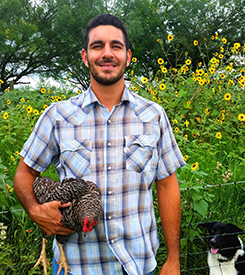
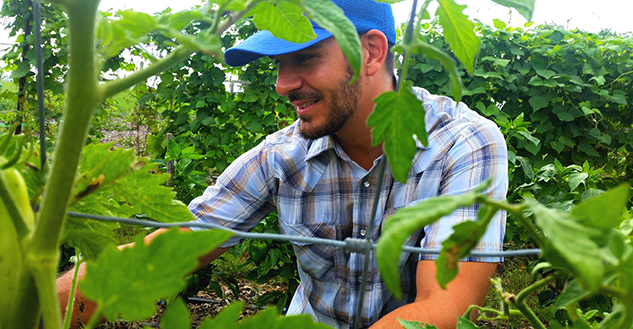
Margaret and Tracy

Margaret De Bona and Tracy Potter-Fins met in Tivoli, NY while working at Hearty Roots Farm

Margaret grew up in the mountains of Western North Carolina and has worked on various farms in Connecticut, Oregon, and New York state. She is a seamstress, an aspiring pickler and preserver, hiker, and country music enthusiast.

Tracy grew up in Moscow, Idaho and went to college in New York state, where she farmed with Hearty Roots Farm and Awesome Farm for three summers after traveling abroad and working on small organic farms in Spain, France, and Ireland. She is a beekeeper, a sheep shearer, and a baker.

County Rail Farm, LLC is leasing 23 acres near Dixon, just north of Missoula, MT. County Rail is their first farm, and this blog is a window into their first year – the trials and the successes. You contact them at countyrailfarm [at] gmail [dot] com and read more about what they’re up to on their website at www.countyrailfarm.com.

If you’re interested in writing about your first growing season, write to info [at] beginning farmers [dot] org.